Rich Soil: AKA – One’s Own Style

Veteran teachers will tell you that year 2 and 3 are so much better than year 1 because once you have a rhythm down, it becomes much easier – less planning, less last minute scrounging, etc. Though this is true to some degree, it is not always the case. I found that each year brought a different class of students with different needs and perspectives, and sometimes, one needed to adjust. Yet, in that adjustment – joy could still be found – as long as you are willing to go with it.

Wuthering Heights is one of my favorite stories. I love the book, the movies, the song. Every time I hear Catherine state “I am Heathcliff,” I am brought to my knees. My heart aches.

Teaching it would then be a great experience. Well, yes and no.

My first group of students was right there with me on their experience of Wuthering Heights, – it was ill-fated circumstance and classism that drove these two soul mates to ultimately destroy each other and everyone around them, all in the desperate need to try and be together despite the odds. Kate Bush became a regular on my students’ play lists and we thought Tom Hardy played the cruel and cruelly treated Heathcliff wonderfully.

My second group, not so much. At first, I was taken aback but listened as they too understood the text as it was written. Catherine was selfish and Heathcliff, well… One of my most memorable student moments so far came out of our discussion of Heathcliff in this class. The conversation went as followed with one of my students:
She, “I don’t like him.”
Me, “Oh yes, why?”
She, “He’s an asshole.”
Me: raucous laughter, recovery, and a quote from Stephen Fry “Heathcliff is a queer moody brute, but there is rich soil there if you care to dig.”
She, “I do not care to dig.”
Me: more raucous laughter.

What a beautiful response. Her frank and fearless response to a teacher who loved what she did not, allowed me to not only hear but also gave me the room to agree. Together we could discuss the silliness of both the characters, their unwillingness to speak the truth to each other, the inability to mourn or stand up for themselves or each other. And at what price? Death and depression in their wakes.

And from there, we discussed the outlying factors of why this might be the case. What was it about the setting, the windy, cruel moors, the North, the role of women in the age, the role of entitlement?

And in the end, it only added to my love of the novel. I was okay that they didn’t like the characters because feeling evoked by art is what connects us to it after all.
I once walked into an Art show when I was in my late teens. And there was nothing very explicit about the art, it was abstract, but I was overwhelmed with a feeling of disgust and nausea. I wish I could remember the artist or even the art itself, but that feeling, that experience, I won’t forget. That was an authentic art experience. And to become so involved in a novel that every time you see the teacher who exposed you to it, you remind her how much you dislike that fella, is too, perhaps an authentic art experience.
So the form this go round isn’t really a traditional form, but perhaps it is the most traditional of all. Write a poem like you normally write a poem. No set structure, unless you have one, no set rhyme unless you have one. Write like you write, and if you think Heathcliff is an asshole, just come out and say it.


My Artistic Style

I am learning
No, wait, that’s not it
I am drawing again
I say again
But that’s not right either
Well, it is but it isn’t
Let me start over…

I have found myself drawn to drawing lately
A little closer to the truth of it.
I haven’t drawn much in my life
I like bodies –
Can do a fairly decent lying down woman
Without hands or feet…
But I have her curves down.
Now, mind you I say fairly decent,
Not for showing to the public fairly decent,
But fairly decent for me.

I still draw with the same techniques
I was shown as a child.
In one of my only art classes –
taught by a nun who loved expression.
She taught me how to draw a tree
One line at a time.
And every mistake became a new limb.

But then we moved,
And I didn’t have art again.

I am, trying out perspective
And I find myself
Staring into the upper corners
of the rooms I am in
Trying to figure out
How to translate
The point where the three lines meet
Onto paper.

Straight line down,
Got that,
Straight line to the left,
Yep,
Now the line to the right,
That’s where it gets tricky for me.
Slightly up or out or down or in
Or…
Hey look!
A tree with two, three,
Four limbs!

I flip through my sketches
And they are heavy leaded,
Awkward, clumsy, smudged,
Childlike,
mine.
Sonnet 2017

Sonnet 2017

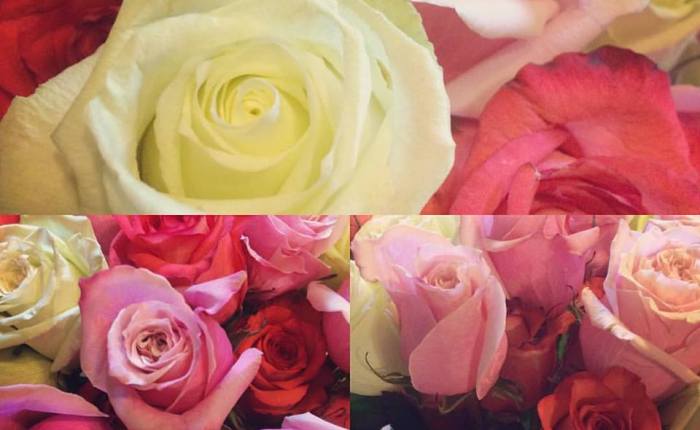
Well, my first graduation as a Principal occurred on Saturday. This class of Seniors, was also my first class that I had experienced from their Freshman Year.  It was, to say the least, emotional.  Each of them presented me with a single rose as they came up to get their diplomas.  I was not expecting this, and had a hard time keeping it together.  A beautiful gesture, and much appreciated.

For my speech, I kept it short, and I wrote them a sonnet. Here it is.

Sonnet 2017
We started at KAPS the very same year,
me as a teacher and you as students.
Each year the school’s gift to us became clear,
KAPS creativity without judgement;
individuals with free expression;
a community of warm acceptance.
And each of you formed your own impressions,
giving the compassionate way a chance.
I’ve watched with immense curiosity
your journeys of ups, downs, and turnarounds.
A view few see outside of family,
with it, comes the task to not let you down.
I wish for your futures both joy and love,
a purpose in life to be a part of.

The English Ode

The English Ode

I recently started going through my father’s things. I had received them a few weeks back in the post, but these things take time. While going through his military memorabilia, I found a repurposed photo album. It contained, for the most part, my poetry written when I was an adolescent.

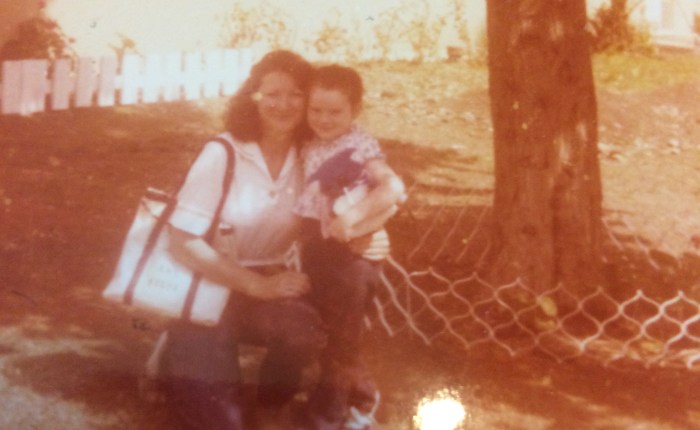
The first page is a list of quotes from authors and thinkers. And, taped to the inside cover is a picture. It is faded slightly and has a reddish tint. It is a picture of me and my mum. We are standing outside a house next to a tree. Mum is kneeling down on one knee; I am standing – I am about four years old, I would guess. Our faces are touching as we look to the camera smiling. I am clutching a blue Koala Bear. It is not one I remember. It is a sweet picture, and it makes me smile. Though, it also makes me reel a little, just a touch.

All the parts of our lives that we do not remember, but our mother does. Fundamental times of development – keys to our personalities, and only snippets linger for us. Many of our “firsts” experienced by the other – mother, father, guardians of us. I have only their word that my first word was chocolate. Though, in fairness, this does seem accurate to me.

What was I thinking when I held onto a chair, table, someone’s leg or hand, and reached tentatively toward another desired spot? Tottering along mostly through momentum than design. Was I thrilled by the lack of fall as my foot planted and held me up? I bet, at the very least, my mum knew how I felt. She almost always does to this day.

I am not sure when I started to hide these feelings, though mostly failing to do so. Sometimes hidden to keep from getting into trouble, and other times to keep from seeing that worried look that said, “tell me.” Maybe this is where the whole fruit in the Garden story stems from. The innocence of lost first steps to the shame of knowing all too well.

I see this struggle happening in our students. They struggle with the notion of telling. Whether about others or themselves. It manifests in many different ways. Some tell too much – giving everything of themselves to anyone who will listen; other won’t speak o word of truth; others still won’t speak a word. All of this I see as a form of preservation and protection. It is easy to see in the ones who guard closely what they have to say about themselves. Yet, it is also true of the chatterboxes. They lay everything bare, exposed so that people won’t wound them with secret stories. They can brush off the rumor mill with “oh yeah, I told everyone about that ages ago.” And, it is true of the ones who cannot tell a true thing about themselves – always searching for that one story that will elicit approval and connection.

Behind it all are the forgotten memories of “firsts” – the first look of disapproval, the first time being laughed at, the first rejection or withdrawal of love. Chances are their mothers remember, and somewhere deep inside – so do we.

As a teacher and now a principal, it is necessary to seek out their selves as a way of connecting, to reaching the truth of them, to keeping them safe. And, sometimes, I cannot keep what I find to myself. I cannot pretend I did not see or hear what they have shown me. And when this happens, and it does, I run the risk of losing that connection between us.

I could say it’s because it is “my job,” but it is so much more than that. It is my responsibility, my calling, my mission, along with all of my colleagues. This is not to say it does not hurt to see them pull away, to accuse you of betrayal, of not listening – but, you live with that because loco parentis is our duty. Not “in place of the friend” – “in place of the parent.” My colleagues and I serve as our students guardians.

So, today’s form is an ode. An English Ode. The English Ode is ten lines per stanza, with as many stanzas as the poet wishes; iambic meter; rhyme scheme: ababcdecde.

An Ode to Mothers from a Childless Mother
I.
Mothers are the keepers of our secrets,
the ones we attempt to hide from ourselves.
Ones only she knows and never forgets.
Ones whispered in our amniotic shells.
Does she smile sweetly and remember?
When her hand passes over her belly
do those whispers sing out to her again?
She’s the balance of love and protector.
And, if I may paraphrase Thackery
Mother is the name of God for children.
II.
Though of the age, I am not a mother.
Perhaps the passing of years will decide.
I know only the love for the other
for all those left with me to teach and guide.
Their children – they are ours for the meanwhile
from eight until four, five days of seven.
We stand in their stead loco parentis
We watch as they grow to adult from child.
They learn, embrace each critical lesson
until they’re ready to Be without us

BONUS!
In that repurposed photo album of my adolescent poetry, I found this gem. Just so I don’t get too ahead of myself, my 15-year-old self had some different ideas about school authorities…

On Duty

Good morning, what brings you up here?
Duty, got to watch those kids.
Chuckle, chuckle.
Talking amongst yourselves,
eyeing us suspiciously
checking all the bathrooms
like a walking smoke detector
itching to wail.
Hall patrol,
Lunch duty,
Bathroom check,
Pass clarifier…
When do you ever teach?

So there… Give either one a go! An ode or a protest poem!

Circular Structure

Today was a fairly decent day as a principal. I facilitated a circle in a senior English class, where the majority of students weren’t passing and ergo putting their chances of graduating at risk. It seems so pointless to come that far in your schooling and then just check out. “Joyful Apathy” one of the students told me, when asked what he was feeling. He said it resignedly. And I wonder how many of them are affected by the current state of affairs. A few said it didn’t matter. There wasn’t anything much to look forward too. Though one did like the idea of being able to get a cat when they moved out of their parent’s house.

There has been a darkened mood this year, not glaringly so, but hiding and swishing about at the baseboards. A meanness, and unhappiness. I know that to some degree it is due to the amount of change that has occurred at the school, mostly, I believe, for the better. But, for teenagers, any change is terrible. It’s almost as bad as no change at all. I can remember as a teacher having students complain that we did the same thing every day in class and it was boring, and when you changed it up, they complained that we should stick to what we always do. I once had a student complain because I gave them a mental health day where they were free to nap, draw, listen to music, catch-up on work, whatever they wanted. Nope. Not having it.

But I digress. Back to the circle. I really enjoy the circle process, and I think I am getting better at it. At least, I hope so. I liked being in the classroom too. I want us to be doing more of these classroom circles. A lot of this year has been setting up; well, stripping down, then setting up, in fairness, and it is only now that I feel we are walking on more sturdy ground. The school year moves like a flash. In the first semester, it seems you’re just trying to keep your head above water and not burn out. Second semester is more even keel but you are playing catch up on stuff you may have let float by in the first semester. And it all starts over again in the Fall.

Simplistic, I know. I do that sometimes. Make things too simple and miss some of the nuance. It’s how my brain deals with knowledge. Give me the complex, the complicated, the intricate, and it’s not until I can put it into basic language, that I can grasp it. I listen along and think, man, I do not understand a word coming at me at the moment, and then something clicks and I say, “oh, you mean this?” and it’s yes, yes, that is exactly what I am saying/writing/painting/gesturing etc. And yet, my partner is almost the complete opposite. I will say something that I believe to be quite simple to understand and he will look at me as if I am made sphinx in front of him. It is only in giving him the intricacies in ever increasing complexity that he is able to parcel the first statement. I used to think he was only messing with me, but now, I think he needs it to be nuanced and complex to even begin to comprehend it. Though, I am probably being over simplistic about this, in fairness.

But, I digress, again.  Though, this is the nature of the circle – to begin in one place, travel out a ways, and then back to where we began. There is in poetry a circular structure that can be used.  The poem begins in one spot, works away, then back again to that spot. There are more formal forms and patterns such as the Rondeau and the Pantoum, and we shall get to those. But for today, let’s stay with the simple idea of the Circular Structure.  Start in one place, move out and around, then back again to where you began, whether in words or in place. Alright, so here’s an example of mine, I look forward to seeing some of yours!


               Stormy Wonderings

She tumbled through her thoughts
Fumbling down lonely pathways
She threw back her head and
Stopped.
Lighting thundered her to sleep
Torturing the night in her absence
Thrusting its tyranny on the trees.
The trees trembled yet weathered
The tempest. A tantrum thrown, is all.
She woke to a tantalizing stillness
A truth taught only at dawn.
Tacitly telling tangerine sunrays
Whispering, softly to trust.
Today tommorrows in no time
Untangle your tone from intent.
She trembled back up to her front lobe
And decided to stay there in bed.

Volta!

Transitions have been on my mind of late. I have been transitioning on many levels since the beginning of the Summer. What does transition mean in reality? To move from one thing, space, place, position, state to another of these? Surely this is life in and of itself? This brings me back to the liminality, the in-between, the space of the threshold. When I move through the archway, what happens to me? Ugh, no this is too philosophical, I am only trying to say that I have moved from being a teacher, to being a Principal. That I have lost loved ones over the past few months. That I have been neglectful of writing my blog. It has been months. And yet, it is also a question of authenticity. Can I continue a blog about teaching and writing if I am no longer given the title of “teacher”? Does my changed status affect my ability to share stories of learning and creating. I hope not, so, I am going to try it nonetheless.

So, yes, transitions. They are always already happening. See, I do not escape the philosophical. My students experience them almost on a daily basis. They are transitioning from childhood to adulthood and the move can be chaotic. I tell them that I see their frustrations – here they are given the responsibilities of adulthood, such as, getting jobs, learning to drive, more household chores, harder classwork, watching siblings, packing lunch, and so on. And yet, they have very few of the freedoms. They do not set their own schedules, their daily routines are in the hands of others, they cannot choose their locations, the don’t always get to make the decisions regarding their life, they may not even get to decide what to do with the money they make. Sadly, looking at this list, I realize how little freedom any fully developed adult gets either…. Any who, once they enter into high school they are barreling down the road to their future, and conscious or not, it’s hard not to reach for the brakes. So they do.

Escapism is the biggest offender on our campus – hiding in the restrooms, sleeping in class, trying to distract the teacher with irrelevant but interesting questions, going for bathroom breaks that lead them to the cafe, the theatre, the pool table, another classroom. Anything, any thing, but facing the task at hand. Some say they are bored, some say “when will I need this?”, some say “I do not care.” But under that, what are the currents?

So, what form do I choose to examine transition? I have searched the poetic dictionaries for transition poems, and the word Volta keeps popping up. It is Italian for “Turn.” Perhaps its more well-known use is in the Sonnet form, where the volta occurs at the end of the Sonnet, lines 13 and 14. The author will transition from a problem to a solution or acceptance of said problem. It is usually indicated with a “but” or an “and yet.”. Think Shakespeare’s Sonnet 130 – where the narrator gives a pretty damning list of characteristics of his “mistress” followed by “And yet, by heaven, I think my love as rare/ As any she belied with false compare.”

As I have already done a Sonnet, I looked for other poems that utilized a volta and came across a Korean form called a Sijo. It is a three line poem, each line containing 14-16 syllables, 44-46 syllables in total. There is a pause in the middle of each line. The first line introduces the idea or story, the second line contains the Volta or Turn, and the third line provides closure.


A Gift?

I’ve felt their loss keenly, scraping surely at my insides.
And yet, I have not time, no space to mourn for my people.
Perhaps this is their gift, a keeping busy to push through the pain.

School’s out for Summer

Summertime is an interesting time for teachers and admin.  It is true that we have more time off than before, but it is not true that we stop working.  There are conferences, and trainings, and meetings, and interviews, and room changes, and schedule changes, and the so on.  Most of us take at least a week or two to reenergize, [read: sleep past noon], but it doesn’t always work that way.  Or the time is not concurrent.

There are a lot of changes that have occurred for me over the summer.  Some great and some heartbreaking. But that I suppose is the way it goes.  I have fallen out of rhythm. so, today I offer some of my old poetry.  And hope to be back on “form” in the coming weeks.

This is one I wrote when I was a high school student – so many moons ago.

Rosemary for Ophelia

Your body’s draped in flowers.
Neither had the chance to bloom.
You obeyed your father’s wishes,
Obedience that sealed your doom.
I wonder how you really felt,
Did he make you tremble?
Were you only trying to impress
When you used to jig and amble?
I know that I shall never see
The truth behind your eyes
I was not there to watch over you
I never heard your cries.
I sleep to see your body,
Floating down the stream.
No matter how I fight,
I cannot change this dream.
Your face is now my own.
Your heart beats inside of me.
Your thoughts flash through my mind.
This feeling won’t let me be.

Did you see them running,
Before you sank beneath the water,
And closed your eyes forever?
Even though your bodies cold,
Do you hear the words he speaks?
Can you feel his arms around you?
Does your soul feel weak?
Or will you never know,
These words he did solemnly sound?
Are you only dust,
That has enriched the cold, cold ground?
I hope that your soul
Has finally found its rest.
So I can say to you,
Goodnight, my sweet princess.

The Bop Form

My students don’t like change. It’s a little paradoxical at times, because with the same breath that they use to disparage the “we’re always doing the same stuff in here” they will say, “hey! We forgot to do the meditation at the beginning of class!” They do like routine, but they also want things new and exciting. It’s a conundrum. Though, perhaps I am being unfair. After all, aren’t we all like that?

In my Interpersonal Studies class, we learn about these mice. The mice are being tested by two different labs to examine how animals engage and explore new and somewhat scary circumstances. For the mice, it is a platform that eventually loses its walls and is just hanging above the ground with no protection. In one lab the mice are cautious, at first, but then bound up and down the new “maze” with little to no hesitation. But, in the other lab, the mice a skittish and do not venture too far from the safety of the walls if at all. At first, the scientists are stumped. These mice are from the same batch, they are fed at the same time, kept in the same laboratory conditions, etc. There is only one slight difference. In one lab, the lab assistant is allergic to mice. So they have gloves on, a mask, and handle the mice only when absolutely necessary. In the other lab, the mice are, to put it non-scientifically, much loved. They are petted and held in ungloved hands and handled for longer periods of time. Can you guess which mice were the more furtive?

What I find additionally interesting here, is that all the mice want to go down that unprotected platform, but the “untouched” mice just don’t have the courage. They don’t feel safe. Which again, seems to bring a paradox into existence – if I don’t feel safe, then I’m not going to try something dangerous. Maybe it’s the idea that you need an anchor to try something new. I will venture down this unprotected path because I trust that my protected path will be there when I get back.

We do all want new and exciting, but we also want that “secure base” that Goleman speaks of.[1] That familiar comforting place we can return to after the thrill of the new.
So it all comes down to building that base in my classroom. Which starts with building trust. Showing students that change is going to happen in life, but that doesn’t always have to be a bad thing. That they can try new things, and fail at new things, and that is just fine as long as they continue to try.

So, with that in mind, today I attempt The Bop Form. It is a relatively new form. It is, according to poets.org, a form of poetic argument. It is three stanzas long: 6 lines – 8 lines – 6 lines. The first stanza states the problem, and the second stanza explores or expands upon the problem. If there is a resolution to the problem, the third stanza finds it. If a substantive resolution cannot be made, then this final stanza documents the attempt and failure to succeed. I combined this form with another exercise I use with my students which is the personified abstract noun exercise. This has resulted in some breathtaking descriptions of such things as depression, anxiety, joy, and love from my students.[2] But I thought I would attempt it with the concept of change. Here it goes:

Change comes in like she owns the place
Ordering and reordering
She may ask your opinion,
But does she really listen?
I’m not so sure.
But, I still hope she does.

You see, Change is the boss.
She is the one making all the calls
You can run along beside
And try and keep up
Or you can stay back in the dust.
She doesn’t mind either way
What’s gonna happen is gonna happen.
And that is something you can’t change.

One thing you can do,
When it comes to change,
Is learn to accept her.
Things will go much smoother for you.
Because if you fight her?
I got news, you’re gonna lose.

[1] This phrase and the mice example come from the text we use in my class: Social Intelligence, by Daniel Goleman. [2] This exercise comes from Old Faithful: 18 Writers Present Their Favorite Writing Assignments.

Your Turn!

Stanzas: 3
Lines: 6 – 8 – 6
Breakdown: 1st – Problem; 2nd – Exploration of Problem; 3rd – Solved or Unsolved?


Cento Form

I find myself slipping in my accent sometimes. This has happened since I was a child. We have moved so many times, and I have always been identified by the where of my previous place. Until it slowly leaked away and bled into the new place, just in time for the shove off to the next new place.

“Oh, you’re from that other place. Don’t you sound funny?” Yes. I suppose.

But now, I like my voice. I like that people can’t quite place me. Because I can’t quite place me. I have places that I claim, to be sure. Places I feel I belong to, I yearn for, I remember in a certain way. The places in my mind. And sometimes here. All those places shape my voice, and sometimes I feel it slipping. Someone will catch it and say “oh, didn’t you just sound like one of us there. Isn’t that funny?” No. Not really. Don’t get me wrong. I like your voices. I like your voices on you. But they are not my voice. I don’t want to lose my voice again. It’s all I have left of my home.

Which is funny. For, I am not sure where that is. Is it where I was born, where I’ve lived, where my family hails from, Mum’s side or Dad’s? Is it where I felt most comfortable, yet left anyway,  or is it here, where I live?

I believe this is a universal “need to know.” It is one of the things I prize highly about the school where I teach. We try very hard to make everyone feel like they belong. And I do mean “we.” The admin, teachers, parents, staff, and students alike. We don’t always hit our mark, and we get taken off track when discussing the finer points of what and who we are, but we do a pretty great overall job of encouraging belonging. And at what better time to share this sense of belonging, then during the developmental age of identity: the teenage years.

I think back now to myself as a teenager. Moved by the Navy every 2-4 years. Sometimes by plane and sometimes by family van. I remember vividly being in the back of the van, laying across the seat, listening to music and watching the clouds go by out the back window. Alternatively, sitting next to Dad in the passenger seat while, Mum and my brother slept behind us. A song would come on the radio and I’d say, “ooh I love this song, turn it up.” And, Dad would until there was no more “up” to turn to, or someone would yell to turn it down. I also remember finding a swing set near the house of a new neighborhood, putting on my walkman and just listening and swinging into the night. Music and motion. Maybe that’s it, maybe that’s home.

So this week I am trying out a “Cento,” and when the Summer is done, I look forward to seeing what my students make of it. A cento is poem that takes the lines from other poems and creates a new poem out of those lines. It can also be a  “Pastiche,” according to Turco’s Book of Forms, where the poet writes in the style of said poets. It can be from one single author’s poems or multiple authors. I have chosen to take and mix lines from one single author. Many nights and journeys I spent listening to this author. And I tell you still; nothing beats a journey to nowhere with the music up and singing out loud to make me feel home. Perhaps, music, singing, and voice are intricately tied up with this notion of belonging.

Anyway, here is my cento created from Peter Gabriel’s songs. This was a fun one!
Peter and Me

I don’t really hate you.
The tension will not ease
digging in the dirt.

I don’t care what you do,
I hear my voice again
like a sledgehammer
shouting out rude names.

We were made for each other,
seeing those kisses in dim lit bars.
Don’t give up –

Me and you.
Slipping the clippers
Through the telephone wire.
I got no papers show identification.
I wanna be somebody!
Hug my knees; scratch my back,
Shock the monkey.

You were like that too.
Hans plays with Lottie;
Lottie plays with Jane.
In your Daddy’s arms again.

If you don’t get even
you learn to take
the family
and the fishing net.
To find the places we got hurt.

And, I will take you.

Your Turn!

Right so, this one is a much looser form.  Find your muse or muses and play with their words and styles.

Limerick Form

Today was graduation.  The Class of 2016 has walked across the stage and moved their tassels to the left. I would say that most of the family celebrations are now coming to an end, and the students have moved on to celebrating with their classmates at various house parties. But, I don’t know that for sure.  What I do know for sure is that I am incredibly proud of each and every one of those human beings, and I wish nothing but the best for them.

It was an interesting day for me.  This was my first class of Sophomores who graduated today.  My first group of high school students I had ever taught.  The growth from that 2nd year of school to the 4th is quite extraordinary.  Not alone do teenagers change dramatically in their looks, their level of maturity in their thoughts and actions also develop at what seems an exponential rate.

I remember these students surprising me on their return from Christmas break that first year I had them.  They seemed to have aged years in a span of two weeks.  They were taller, faces altered, their voices deeper, and their attention spans just a little more focused.  I could not fully grasp what I had experienced, but it felt amazing.  Being witness to the growth of a human being is such a gift.  Even for a few years.

In fact, it is all a little absurd.  Which is why I have chosen the humble limerick for this week’s form.  An absurd poem for an absurd moment. When reading up on the limerick it has been equated to both a “madsong” and a “nonsense verse.”  The OED tells me that it is “intended to amuse by absurdity.” The limerick is traditionally a bawdy little rhyme, but it doesn’t have to be.  They are often spoken to make people laugh though.  It has five lines with an aabba rhyme scheme.  With the three “a” lines usually longer than the two “b”‘s.

So here is my try then.  I have to admit that I am not in a particularly bawdy nor humorous mood this evening.  I am, like many of my colleagues, absolutely exhausted and a little saddened to have a year finished.  And at the same time so very happy to have a year finished.  Life is fun, no?  Goodnight then, and I hope you enjoy a rather more pensive limerick than one might have expected…


The school is so quiet at night time
The bells echo loudly as they chime.
It’s like an intrusion,
A mental confusion.
A dark, empty school is quite sublime.


Your Turn!

Lines: Five
Rhyme: aabba
Rhythm: “a” lines 9 syllables, “b” lines 6 syllables